Define composite controls
After using the model to write a SWT interface, if the interface is reusable, it can be defined as a composite control.
The main methods of defining composite models are as follows.
- First use the model to write the prototype of the composite control.
- Create a model, implement the create() method, create a Java object through the prototype in the create() method, and make some settings based on the current model.
- Compound control models usually need to inherit the LayoutDatas model.
- Register the control model under the control master index so that it can be used when writing the SWT model.
The following 40-second GIF video demonstrates how to define composite controls.
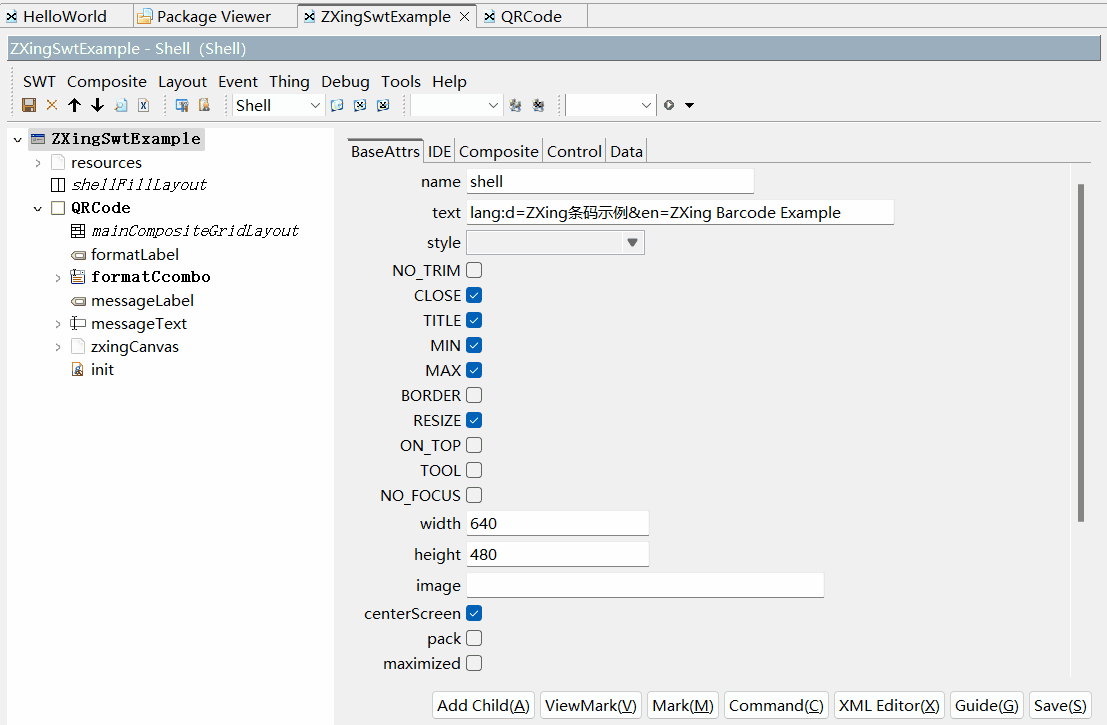
The Groovy code for the create() method in the above example is as follows.
import xworker.swt.util.ThingCompositeCreator;

//Usually use ThingCompositeCreator to help create objects
def cc = new ThingCompositeCreator(self, actionContext);

//Set prototype
def prototype = world.getThing("xworker.example.util.barcode.ZXingSwtExample/@mainComposite");
cc.setCompositeThing(prototype);

//Create
def composite = cc.create();

//To avoid polluting variables in the current context, it is common to use a separate context
def ac = cc.getNewActionContext();

//Save variable. The saved variable is usually used for interaction later.
actionContext.g().put(self.getMetadata().getName(), ac.get("messageText"));

return composite;
- SWT
- 1.Introduce
- 2.Design Ideas
- 3.Online Documents & Examples
- Application Demo
- Shell
- Workbench
- Application
- Control Demo
- Form
-
Table
- Paging
- Cell Editor
- TreeModel
-
ChatGPT
- Image Editor
- JCTerm
- Design Demo
-
Define Control Model
- Define Composite Model
- Guide
-
Design
- Auto Update
- Simple Design
- Other Design Tools
Copyright © 2007-2019 XWorker.org 版权所有 沪ICP备08000575号
